About the episode
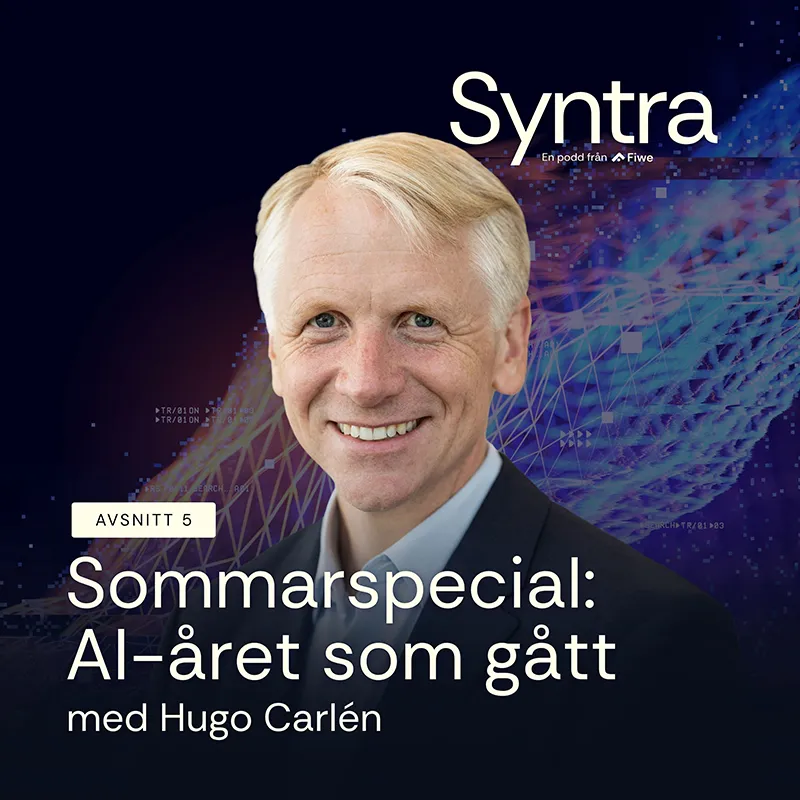
What happens when AI takes over not just the execution, but the thinking behind it? In this summer special of Syntra, Mitra Javadzadeh and Glenn Svanberg are joined by guest Hugo Carlén to reflect on a year that has changed the playing field.
They unpack the difference between using AI well and producing AI slop, discuss how global unrest should change our choices of IT services, and why ten-year projects belong to the past.
They also explore how human interaction and human capital grow in value as AI takes up more space, and what that really means for those who have just graduated.
Want to go deeper? Explore more in our library.
In this episode, you’ll learn:
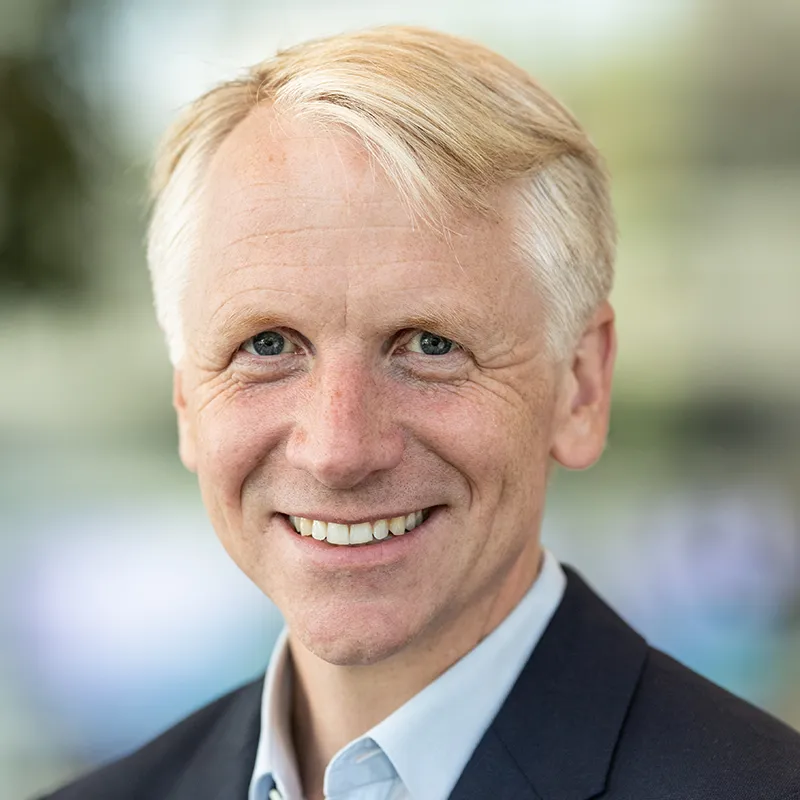
Voices in this episode


Listen to the episode
Transcript of the episode
Introduction
Mitra:
Welcome to Syntra and today's episode, where we'll be reflecting on the year that has passed. Before we begin – for those of you listening for the first time – this is the podcast for you who drive your function forward and want to understand how the interplay between systems and users shapes the way we work. We share insights into how new technical possibilities are transforming the way we work and interact with technology. First of all, welcome back, Glenn.
Glenn:
Thank you very much. Great to be here.
Mitra:
Yes. Today we have a special guest with us – Hugo. Really great to have you here today.
Hugo:
Thank you, Mitra, great to be here.
Mitra:
Yes. Who are you, Hugo?
Hugo:
Hugo Carlén. I've worked together with Fiwe in various constellations for about the past ten years. I've had the chance to work closely with Glenn on previous assignments.
I'm a civil engineer by training, but I have a strong interest in business, and that has led me down the path of product data and PIM. I think it's a fascinating part of the ecosystem and the digital landscape, where you weave together a customer offering.
I've had the privilege of doing that together with Fiwe and Glenn and other people here. So it'll be fun to come back and talk about this, and even bigger questions, today.
Mitra:
That's wonderful. It's really lovely to have you here, Hugo. You have such great thoughts on so many different topics, so it's a perfect fit to reflect on a year that has been quite eventful, to say the least.
AI: from chatbot to agent
Mitra:
One question, if we reflect on it: a year ago, you couldn't create a PowerPoint template automatically, fully, in one step. You had to split the process into several steps. Today those steps are gone, and we can create a PowerPoint template in one sweep. The content, the design, and the images are all generated. Where is this trend heading, in your view?
Glenn:
Really exciting. AI has had a huge impact over the past year. I'd say we've essentially gone from having chatbots where you ask a question and get an answer – and then you can take that answer, cut it out, and paste it somewhere else. But this year we've introduced agents – AI has been given a whole set of tools to modify all kinds of files, to modify just about anything. And that opens up the possibility of generating an entire PowerPoint. Though I'm not sure that's actually such a great thing.
Hugo:
But it does open up entirely new possibilities. We've gone from using AI services to create code, to creating entire ecosystems, to creating documents in all kinds of formats. It's a very rapid development, and it's not just changing the everyday life of developers. In a way, this is changing every white-collar job. And it's happening very fast.
Glenn:
But it's almost as if it sometimes goes a bit too fast. We've gotten these tools within a single year. I constantly see people starting to say: "I transcribe meetings and get some meeting notes out afterwards."
Everything in there is correct, but is it relevant? Because most of the time it just becomes AI slop if you use it for the wrong thing. Has the AI really understood the essence of what we talked about? Usually it hasn't, not quite – the words are right, but you're not saying anything. It just becomes noise.
Hugo:
And then there's the fact that these language models are extremely good at our language. So it often comes out well-phrased, even when it's completely watered down. And to see that, you actually have to go through it, read it, and try to ask the critical questions. That requires actually taking the time. Taking the energy.
The cognitive load – what happens when AI thinks for us?
Mitra:
Absolutely. But it feels like we just talked about several steps disappearing. Is the trend heading toward us doing less and less as humans? Is that what we're striving for with technology? To remove as much work as possible. Where do we land?
Glenn:
I think we're lazy by nature and always try to remove as many steps as possible. But when we introduce these kinds of tools that are so generic – they can remove almost every step in the process. What I think the problem is, is when you remove the cognitive load. When you actually remove the thinking dimension of it. That's the part we need to keep. We can let AI help transform my thought into something concrete. But what people often do is hand over the thinking itself. Because we're lazy, and thinking can really hurt. "Do I really have to dig into this task and think really hard about it? Better to just ask a chatbot." But then I lose the essence of it, and it becomes completely watered down.
Mitra:
But if we remove that process – can we still think? Don't we need the execution process in order to be able to think at all?
Glenn:
At least parts of the execution process. I think you can speed it up. I don't need the part of the execution process that's about hunting for which button to press when creating my PowerPoint. But I do need to do the thinking about what it should actually say. In what order should the slides be? That thinking process I have to keep. We need to hand over the right task to the AI.
Hugo:
It's a bit tricky handing over the right processes to the AI. It still can't pick up the socks lying on the floor, and it can't load the dishwasher. What it can do is create text, write emails, and book meetings. Quite a lot of the more "dead" tasks we have, at least at home, AI can't handle today.
Mitra:
It will be exciting to see how this trend develops, to say the least. A lot is happening very quickly.
Global unrest and the choice of IT services
Mitra:
Another point we've been thinking about: right now there is, you could say, a global unrest, and our IT services are global. How does this unrest affect our choice of services?
Hugo:
I think it has probably affected our choices far too little over the years. We've had the privilege of being able to pick the first service that comes along without having to ask the critical questions: "Who is actually behind this? Where does my data end up? Can I trust that it will work over time?"
In many ways, I think the digital honeymoon may be over. We're seeing a lot more breaches and breach attempts, but also questions about which players we can trust over time.
Glenn:
We've probably been quite naive, really, just outsourcing most things and using whatever application, because it's the best one. But when the world starts shaking – especially around larger implementations – and you don't know what to rely on, I think it creates insecurity, and people don't really dare do anything.
In a way, I think it paralyzes society, or at least the companies we work with. How do you dare to invest in something? Nobody knows where we'll be in five or ten years.
Mitra:
No, and what digitalization brings – which we perhaps didn't have before – is that we're now linked together with other parts. We're connected to other pieces in a way we weren't before. That's what the technology enables. So suddenly, everything that happens in the world affects me in a way it perhaps didn't before.
Does this mean we pause investments because of uncertainty? Uncertainty has always existed, throughout all the years, throughout world history. But now, in the digital landscape where we're interconnected in a different way, it affects us more.
Hugo:
One way is to pause, but the risk is that we just lie down and die. Because development moves fast. Shouldn't we rather change our rollout timelines?
Region Västra Götaland started implementing the healthcare system Millennium just over ten years ago, and now it's been scrapped. That took ten years.
If we look ten years ahead into our crystal ball, we have no idea what the global landscape looks like. Do we have a global world, or separate regions cut off from each other?
So sitting down today and planning a ten-year implementation project – I hope nobody anywhere in any organization is doing that. But in between, what do we do, Glenn?
Glenn:
Everything moves faster and faster all the time, and I think that's also part of what creates uncertainty in the world. But development and technology are also moving faster. It's a giant snowball that just keeps rolling. And I actually think that can be an advantage here. We can't make ten-year plans and projects, but you can do what used to be a ten-year project as a one-year project. Because you can use the technology to work faster.
I definitely believe in shortening the timelines, but perhaps daring to experiment more. It doesn't have to be gigantic projects. Dare to innovate and test small things, and let them grow instead. That's one of the things we learned during the agile transformation, when we went from big waterfall projects to doing development in small increments all the time.
Hugo:
It's probably more about building your organization to handle this continuous change and improvement.
We made a big change where Glenn and others joined a DevOps team and worked in a much more integrated way with our business. That created entirely different conditions for making incremental improvements over time.
And we can see that this kind of work will move so much faster next year.
Glenn:
Precisely when you grow the organization together with the technical side like that, so that you work closely together, that's when you can do the iterative work. But if they're far apart, then...
Hugo:
Then it doesn't sync. We really have to understand what's meant between the words – between the person who has the problems and the person who's supposed to solve them.
Mitra:
But how should companies that feel a certain unease act? What should they do? How do they take a step forward? How should they think?
Glenn:
I'm very much on Hugo's line there. Don't think so far ahead. Think as far ahead as you can actually see. Can you trust what the world looks like in a week? Then maybe that's where you should plan. If you dare stretch it to a few months, think in that dimension instead.
Hugo:
And then maybe it's more about building the team that works, and that can steer this in the right direction on its own. Because laying out a direction and saying "this is what we'll do for the next five years" – that's very hard. What we can do, however, is build a team that can grow over time and find and navigate the challenges itself.
And then there's also not putting all your eggs in one basket. Out of convenience, for cost reasons and so on, we've put an awful lot of eggs in the American cloud companies' basket over the past 10–20 years. It's been very convenient, but it also comes with risks. How locked into your cloud environment are you? What alternatives are there?
Mitra:
Yes, what alternatives are there? If we dive into that question – globally, for companies to choose between.
Glenn:
We're seeing an upswing among many larger organizations – like several regions in Germany, for example – that have chosen to leave Microsoft and move entirely to Linux instead. Just as a basic platform to stand on. I think that's an interesting direction. That's an alternative at the operating system level. But if you look at smaller applications, there isn't much that competes with the American giants. Especially not when it comes to AI. Europe doesn't have all that much to bring to the table there.
Hugo:
No, and the question is what responsibility we then have for Europe to keep up in the AI race?
It's very easy to buy the services from OpenAI or Anthropic. Going out and buying a service that perhaps doesn't quite deliver at the same level today because it's European – in some industries, that will probably soon be a requirement. But who's going to take that step?
Glenn:
But that will also just put us further behind. It will make our wheels turn more slowly. Is it reasonable to say no thanks to the best stuff just because you can't trust it?
Mitra:
It will be interesting to see how this develops, what alternatives emerge. Because as we said, now that we're interconnected, the parts we may need to improve and develop further also become visible. But to sum it up: make sure you have the right team that can build the road while you're walking it, since we don't know.
Hugo:
And that we have the curiosity to constantly look at alternative systems, alternative processes. So we have a main track, but we keep our eyes open to the sides at all times.
AI and jobs – what happens to human capital?
Mitra:
Exactly. Another point that has marked the past year quite a bit is AI and the discussion about whether AI has actually taken all our jobs. What are your thoughts there?
Glenn:
Headlines keep popping up in the news about how this or that giant company has laid off several thousand employees. And they claim it's because they've become so much more efficient. I don't know if that's actually the truth, or if it's just a way of saying: "Okay, our business isn't doing so great, so we can lay people off, but we can make it look good – like we're doing something good, that we're at the forefront with AI, so we don't need as many people anymore." I think that's probably part of the truth. But what do you say, Hugo?
Hugo:
It's an uneven development of the world economy. A large part of industry is running at half speed or idling. We have big economies in Europe, like Germany, with massive problems. And then we have a never-before-seen valuation of a couple of large AI companies, where all the money is pouring in.
So the gaps are getting bigger and bigger. And the question is – these AI companies that are so heavily valued, are they overvalued, or is this reasonable? And how are they going to manage if the customers of these companies aren't actually making money? It's hard to see.
Mitra:
We talked earlier about how technology removes several steps. We talked about giving AI the right task, how execution changes. But what should remain is surely the human and the analysis – where the human uses the technology to make even better analyses and see more patterns than perhaps you couldn't see before. Precisely because the technology can connect more data points than I can manage as a single individual.
What I'm thinking is: isn't it rather about a shift where we keep the same workforce, but assign it the weight of a higher human value? That we value the analysis more highly, in a different way. That getting to meet a human and have a conversation with a human is suddenly valued even more. If we take customer support as an example – where AI can quickly help you, and you get help the right way – but when it ultimately lands with a person, the help you get is even more qualified. Is that a thought worth playing with? That we start valuing the AI work a great deal, but that human capital perhaps gains even greater value.
Glenn:
I think we're going to get a backlash from all the AI slop that's coming. When low-quality AI shows up, I'm already starting to sense it quite quickly – that this is something someone hasn't really thought through. Then I completely lose trust in where it came from. And then I value what's human considerably more.
I think you're largely right that valuing the human is on the rise – the fallible, the messy whiteboard. That's where the real value is, really. When someone has genuinely thought things through.
Hugo:
And I think we truly value the human encounter – where a human asks what we think about something.
I used to have a broadband subscription where, on behalf of the operator, I'd get a call roughly every three months from someone wanting to sell me TV services and channel packages. I was with this company for ten years, so they must have called 40 times. And the questions were almost identical every time: "Would you like to buy a channel package with 157 channels, or 68 new sports channels?" And every time I said no. But this information about my total lack of interest in TV channels was never built upon.
Not a single time did they call and ask: "How's the broadband working? Is there anything you'd like to be different?" Now, this was human time being wasted on these sales calls. But this is where I think you could really use services like AI to summarize: what do we think the customer wants? And then it's valuable to actually call the customer. Be open to real information.
Glenn:
That's where we have to use AI for the right things. AI is great at helping you figure out what Hugo actually wants us to ask about. What is he interested in? He doesn't care about TV channels. AI can do that analysis, but then you want the human contact to actually ask the question. We have to use it in the right place.
Hugo:
Then maybe two calls are enough instead of 40. Or one.
Glenn:
But we're lazy at heart, and I think in many ways we're over-lazy. I'm more than happy to spend four hours automating a process for myself that really takes an hour to solve.
I think the more we try to make things more efficient, the more we end up having to do. We're vastly more advanced as a civilization today, but we don't have less to do because of it than I had 20 years ago. I think we just create more work. It's never going to run out.
Mitra:
I've been on the customer support side. You chat with an AI bot, and I've noticed that I quite quickly type: "Can I speak to a human?" That's my own shortcut.
Hugo:
How often do you get one?
Mitra:
Quite often. They transfer me.
Hugo:
Okay, because there are a lot of those bots where the answers are complete gibberish. And then there's no handover – and then you've lost it. Because that customer experience is terrible. But I do think most bots – even a very cheap AI bot – would be good at understanding that this isn't enough anymore. Now Mitra actually needs to talk to a human.
Mitra:
Exactly. I may have had to repeat myself twice. "No, I want to talk to a human." But so far I've been lucky that they've always connected me to a person.
Hugo:
And you can tell quite clearly which companies jumped on the train five years ago and installed a chatbot that could answer a few limited questions back then, versus those plugging it in today. There's a huge difference.
Glenn:
It's a gigantic difference. Now you can actually get pretty good answers.
Hugo:
The key when investing in this is not to see it as a one-off purchase. You have to build a process for it. The service should learn more over time, and it should be possible to upgrade it as the services get better.
Mitra:
Exactly.
The future of junior jobs and lifelong learning
Mitra:
So what actually happens to our junior developers? We're talking about what technology can start performing – tasks that we've carried out ourselves until now. We've spent five years on an education that perhaps isn't as relevant going forward. What are your thoughts there? Is it worth continuing to educate ourselves the same way we have so far? Or how should the future generation move forward?
Hugo:
There are a lot of alarming reports today about junior jobs being gone. New graduates are struggling to find work, and we see that as a huge problem. But it's probably just the first indication of how it's going to be across the entire labor market. You have to stay updated, stay current, to stay relevant. But it shows first in the junior jobs.
Glenn:
The same wave will make its way toward the more senior jobs. But I think that overall, the definition of how you need to work is going to change. We're in a society that moves faster and faster, and it's becoming more and more important to learn, and to accept that we don't live in a static world. It's changing all the time. I can't do what my grandfather did – train for two years at 16 and then work in that field for 50 years. That's not the case anymore. You used to be able to commit to a career that might last 10 or 20 years. I think that's being shortened too, like so much else.
Hugo:
And exactly what education will look like tomorrow – that will be exciting to follow.
Mitra:
Yes, and we can say that knowledge is still – and will always be – just as important. But how we learn and absorb that knowledge, that process is likely to change.
Glenn:
Curiosity is a key word. Continuously learning things and trying to understand, staying current and staying at the forefront.
Summary – reflections and advice for the summer
Hugo:
And now, in times like these, many people are heading off on vacation. What advice do we have for those about to settle into the hammock?
Mitra:
Exactly. What should we encourage them to do? Spontaneously, I'd say – speaking of curiosity – try something new. Try a new tool. Learn in a new way. Start over from scratch in a particular subject, and preferably do it together with the technology to see how it interacts. So don't just dive into a new subject – also try one of these new technologies. See what you can do on your own, without anyone else, that you perhaps couldn't do before.
Hugo:
And perhaps also, during the vacation, reflect a bit more long-term. Let your thoughts take some time, and maybe for a moment put down the phone with the chat answer. Because some of these questions don't need an answer within the second. Maybe we let them germinate – for minutes, hours, maybe even days.
Glenn:
Exactly, because what you get out of that reflection is what you need to bring with you into the technology and try something new with. I'd probably place myself somewhere in between the two of you. Take a step back, reflect a little. What's important to me? What do I want to do? And then see how the technology can help me with that.
Hugo:
And come autumn, what do you want to be able to create, Glenn?
Glenn:
I want us to stop looking so much at AI capabilities and actually just use AI in everyday life. I want everyone to have it as a natural part of their everyday life, and most of the time you shouldn't even know it's AI. It should just be like electricity. Just something that flows and underpins what I achieve.
Hugo:
That will be exciting to see.
Mitra:
Yes, if we meet here again a year from now – what do you think will have happened by then? A lot has happened in just this past year, but if we try to gaze into the crystal ball here, Hugo – what do we think will have happened in a year?
Hugo:
It will probably be very hard for us to tell what's created with AI and what's created by humans. And that has happened very fast.
The question is whether we'll rather need to consider – maybe it's like Glenn said earlier – that it's irrelevant how something was created, but that it was created with intent, created with a good underlying idea. That's probably what matters most. And there I still think we humans play a big role. Figuring out what need we're trying to solve, and then using every possible tool to get there.
Glenn:
I'd guess that if we're sitting here in a year, we'll have better insight into whether AI is actually a bubble – or whether the value being promised is actually realized. I don't know the answer to that question today, but I look forward to sitting here in a year and perhaps understanding a bit more.
Mitra:
It feels like, if I'm to sum up, a recurring reflection you've both arrived at is: "I don't know, but we'll see." And being open to what's coming, and being ready to build the road as you reach it.
Hugo:
And it does seem pretty exciting, doesn't it?
Mitra:
It's really exciting. But for some, the unknown is frightening. So you have to stay curious, as we said. Time has run out, as it so often does when you're having a lot of fun. A big thank you, Hugo, for joining us and reflecting. Great to have you here.
Hugo:
Thank you, and have a wonderful summer.
Glenn:
Thank you very much for coming, Hugo.
Mitra:
Absolutely lovely. Take care.