

Master Data Management (MDM)
Collect, structure and ensure the quality of your data for better decisions, more efficient processes and long-term customer relationships.

In a world where data is spread across countless systems, departments and channels, it quickly becomes difficult to know which information is accurate and current. With Master Data Management (MDM), you can create a single trusted source of truth for your most business-critical data, from customers and suppliers to products and organizations. It leads to better decisions, more efficient processes and stronger customer relationships.
What is Master Data Management (MDM)?
Create structure and control
MDM collects, consolidates, and ensures the quality of data from multiple systems. The result: you eliminate duplicate work, reduce errors, and establish a stable foundation.
Business value:
Lower costs and less time spent on manual corrections.
Turn data into insights
When data is consistent and accurate, it can be analyzed and used as a strategic asset. You gain clearer decision support, spot trends faster, and can act proactively.
Business value:
Faster time-to-market and increased precision in purchasing, assortments, and campaigns.
Deliver consistent experiences
With a central source of truth, you can ensure that customers, partners and employees always receive the same information. It builds trust and strengthens relationships.
Business value:
Higher customer satisfaction, reduced returns and increased loyalty.
How we deliver an MDM project
Most MDM projects start with the technology. We start with the business, with your goals and the parts of the organization where better data makes the biggest difference.
- Business case
Together, we define the value MDM should create and where it should be felt first. This sets the direction for the entire project. - Master data and ownership
We determine which data is most business-critical and how it should be defined, and establish Data Governance that makes clear who owns the data and which rules apply. - Platform and architecture
We choose a solution based on your system landscape, so that the MDM platform becomes a natural part of your day-to-day operations. - Implementation
We build and roll out the solution step by step, with a focus on delivering value early. - Operations and continuous development
We track the impact, strengthen your own capabilities and keep building as your business evolves.
Data you can trust across the entire organization. Internally, that means less duplicate work and fewer manual errors. For your customers, it means the right information at every touchpoint, which builds stronger customer relationships and a brand that inspires confidence.

Dive deeper into Master Data Management
Explore our insights on how organizations take control of their master data and turn it into business value.
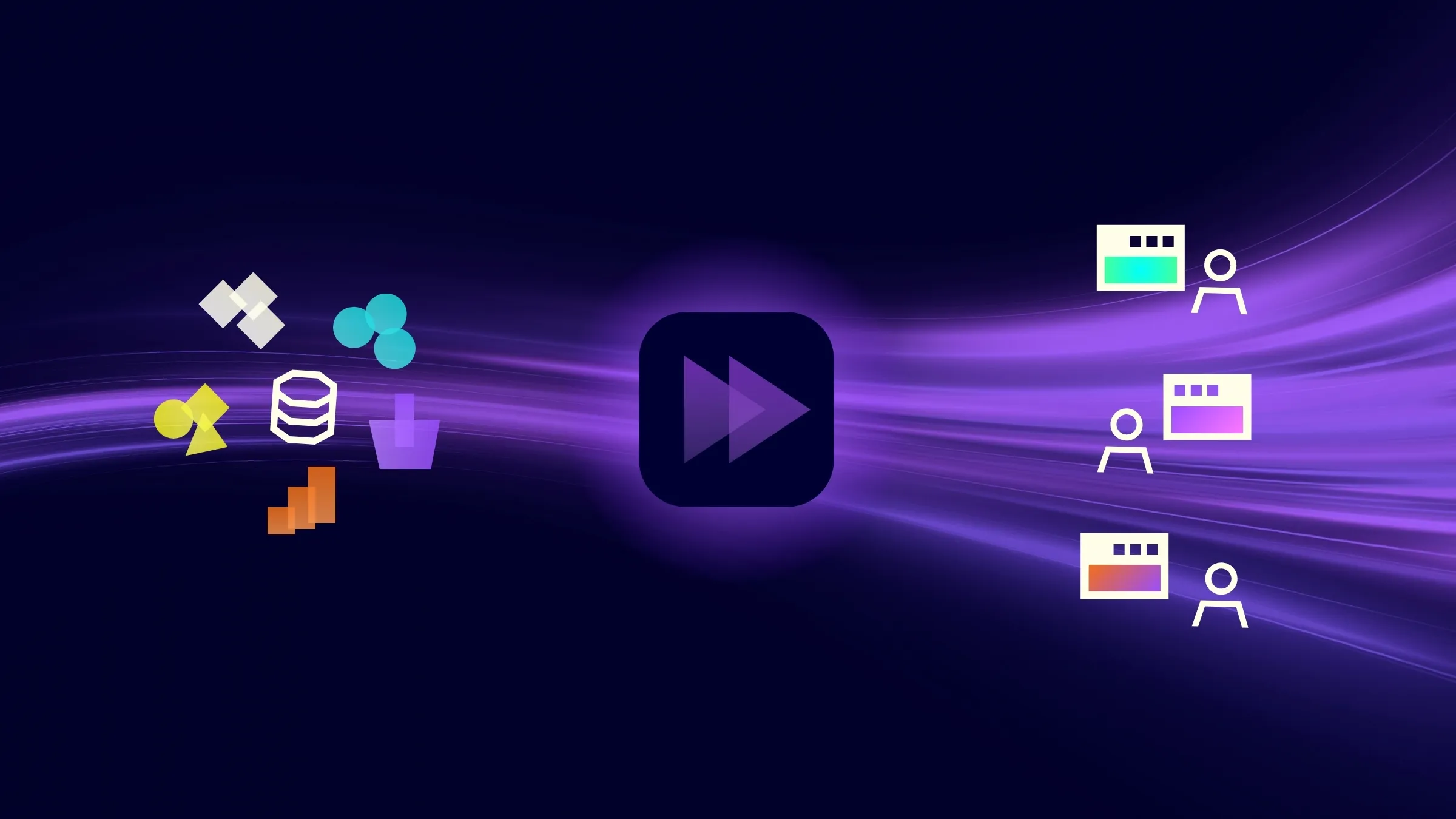
Have we been using AI the wrong way? Data Experience and AI in processes




What is MDM? And why do you need it?

The importance of Data Discovery in MDM projects

Success Factors for Achieving a Successful MDM Project


From Data Governance to AI

Introduktion till Data Governance: Effektivisera er datahantering

Getting Started with Data Catalog: A Step-by-Step Guide to Effective Data Management

Improve data quality and compliance with Data Governance and Catalog

Maximize the value of your data with Data Governance and Catalog


Utbenat: Master data
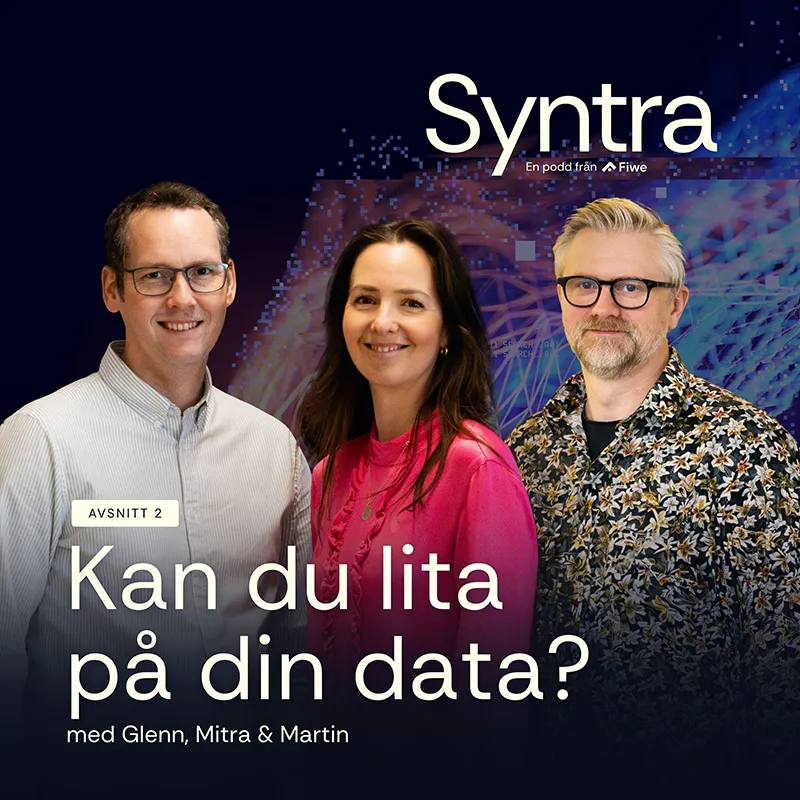
Why Fiwe is the MDM partner for you
Implementing an MDM system is one thing. Making it an engine for business value requires something more.
Strategy with the business in focus
We never start a project by talking about technology. Let's start with your business. Our advisors work with you to identify which master data is most critical to achieving your goals. We help you establish ownership and the processes necessary for the value of your MDM initiative to persist and grow over time.
Technical excellence that understands the big picture
With over 20 years of experience and deep partnerships with leading platforms, we have the technical excellence required. But our real strength lies in our understanding of the big picture. We know how the MDM solution must interact with your ERP system, your customer and sales support and your digital commerce to create a frictionless whole.
A partnership that builds your capabilities
Our goal is not just to deliver a project, but to make your organization truly data-driven. Through flexible collaboration models, training and proactive management, we ensure that your MDM solution evolves in line with your business. We are a long-term partner that gives you the tools and knowledge to innovate and win in a data-driven world.

Frequently asked questions about Master Data Management
Answers to the questions we hear most often from organizations preparing for an MDM initiative.
What is the difference between MDM and PIM?
MDM governs an organization's shared core data across multiple domains, such as customers, suppliers and products, and ensures it is accurate and consistent in every system. PIM (Product Information Management) focuses on product information and enriches it with what is needed to sell: descriptions, images, specifications and channel-specific content. In larger organizations, the two complement each other. MDM provides a reliable foundation, and PIM makes product data sellable in every channel.
What is the difference between MDM and Data Governance?
Data Governance defines the framework: who owns which data, which rules and quality requirements apply, and how decisions are made. MDM is where that framework is put into practice, through processes and a platform that keep master data accurate. Without governance, an MDM solution quickly loses quality, and without MDM, governance often remains a policy that never reaches the systems. That is why we always work with both at the same time.
What is a golden record?
A golden record is the consolidated, quality-assured version of a data object, such as a customer or a product. It is created when the MDM solution matches and merges duplicates from different systems and determines which information is most reliable. The golden record then becomes the version that ERP, CRM, e-commerce and analytics rely on.
What MDM implementation styles are there?
There are four common styles. Registry links records across systems without moving data. Consolidation gathers data in a central hub for analytics and reporting. Coexistence synchronizes master data between the hub and the source systems. In a centralized style, the MDM platform becomes the single place where master data is created and changed. The right choice depends on your system architecture, your maturity and which business value should be realized first, and many organizations move between styles over time.
Which MDM platforms does Fiwe work with?
We have deep experience with leading master data platforms and are a partner of Informatica among others. But we never start with the platform. First, we define which business goals MDM should support, which domains should be governed and how the solution must work with your ERP, CRM and e-commerce. Only then do we choose the platform and implementation style, so that the technology fits your business and not the other way around.
Do we need MDM before an ERP migration?
Yes, in most cases. Master data is one of the biggest risks in an ERP migration, because duplicates, incomplete records and inconsistent definitions will otherwise be carried into the new system. With MDM in place, you can cleanse and harmonize the data before the migration and at the same time decouple master data from the ERP, keeping it under control through future system changes, acquisitions or expansion into new markets.
How does MDM relate to AI?
AI is never better than the data it is built on. If the same customer or product exists in several versions with conflicting information, AI will give conflicting answers. MDM provides a consistent and traceable foundation, with clear definitions and ownership, that makes it possible to use AI in business-critical processes with confidence.
Where should you start with MDM?
Start with the business, not the technology. Identify a specific capability that requires better data, such as a single customer view for sales or a consistent product catalog for e-commerce, and build a business case around it. Then narrow the scope to the master data domain with the greatest impact, establish ownership and rules, and choose the platform and implementation style accordingly. This delivers value faster and with lower risk than trying to solve all data at once.
How long does an MDM project take?
It depends on the number of domains and systems, the current data quality and how ready the organization is for change. We recommend a phased approach where a first domain delivers measurable value before the next one is added. This gives faster results, lower risk and an organization that grows into new ways of working as the solution evolves. MDM is not a project with an end date but a capability that is built out over time.
How do you measure the value of MDM?
Value is best measured against the business goals MDM is meant to support, not just data quality. Common metrics include the time from a new product or customer to being ready in all channels, the share of manual corrections, the number of duplicates, incorrect orders and deliveries, and the lead time for reporting. We define the metrics together with you in the business case, so that the impact can be tracked.
Ready to take the next step with your data?
We help you transform data into information and communication that truly makes a difference – for your workflows, decision-making and product offering.
Explore our areas of expertise

Collect, enrich and distribute your product information to build stronger brands, accelerate time-to-market and deliver convincing customer experiences.

Create order, trust and accountability in your information management.

Collect, visualize, and analyze patterns in your data to make better decisions, streamline processes, and gain a clearer view of what lies ahead.

A strategic and commercial engine that ensures your brand is always presented at its best – in every channel.

We help you digitize your experts’ unique knowledge and turn it into an intelligent guide that creates value at every step of the customer journey.

Robust and scalable solutions that handle B2B complexity and turn it into a simple and effective buying experience.
Collect, structure and quality-secure your data for better decisions, more efficient processes and long-term customer relationships.

Search solutions designed to interpret intent and understand your customers’ world turning their queries into successful conversions.

Use the knowledge a customer shares to create simpler, smarter and more relevant buying experiences.