Thesis project at Fiwe 2026
Are you nearing the end of your studies in IT, data or a related field? Then you’ve come to the right place. Do your thesis project with us!

We at Fiwe offer exciting opportunities for students who want to complete their thesis within digitalization, business systems or other technical solutions during spring 2026.
With us, you’ll have the opportunity to work closely with our experienced experts and be part of innovative projects that help our customers streamline their business processes and reach their digital goals.

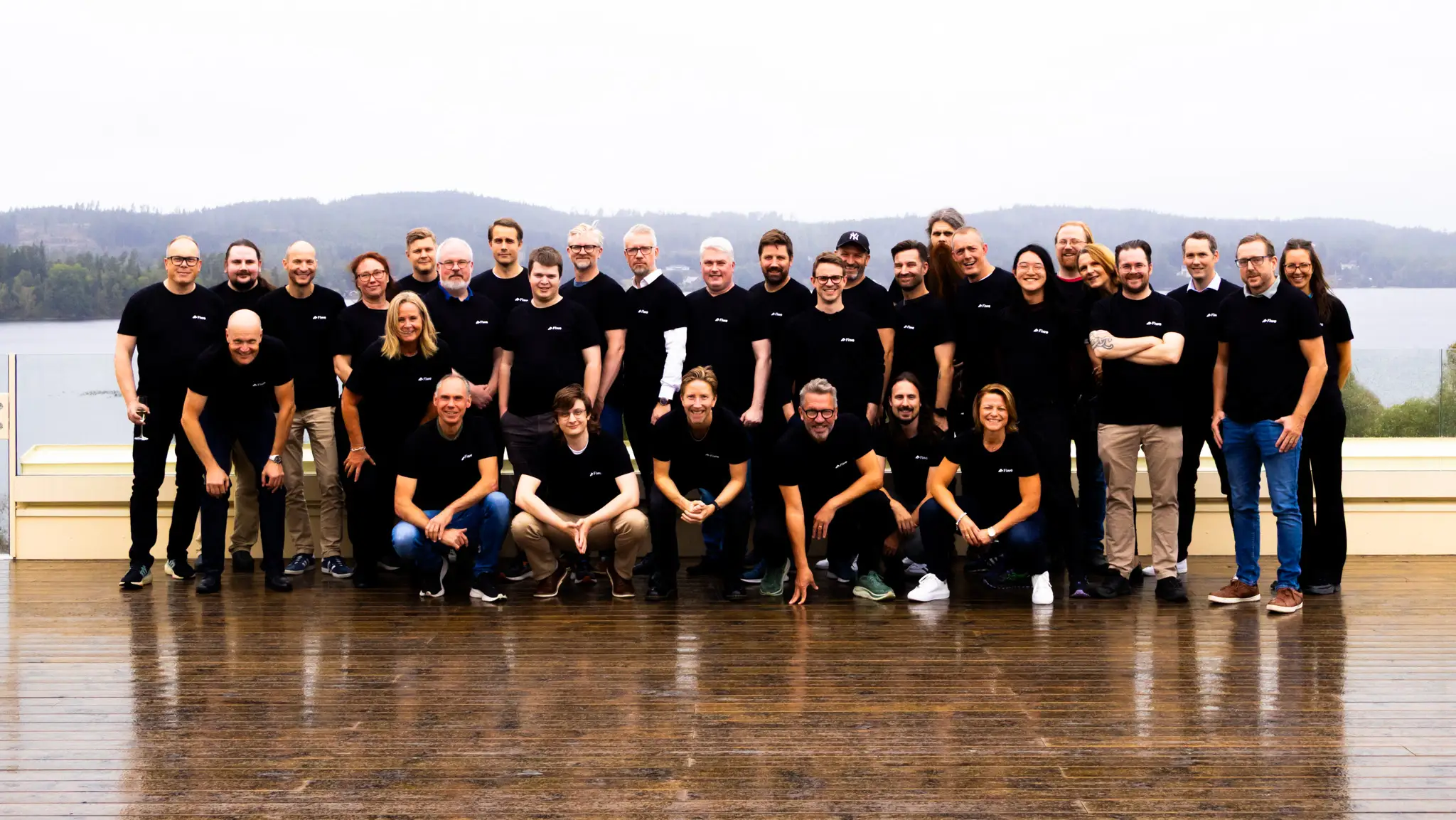
“We’re working together to create an epic everyday life where we have fun while delivering real value for our customers.”
Why do your thesis at Fiwe?
- Exciting projects: You become part of projects that create real change and impact for our customers.
- Guidance from experts: You’ll receive support from our experienced colleagues in business systems, automation and digitalization.
- Growth & learning: You get the chance to develop your technical and analytical skills while contributing new ideas to our solutions.
Who are we looking for?
We’re looking for someone creative, motivated and passionate about working with technical solutions and digitalization. You should be in the final phase of your studies and have a strong interest in solving complex problems hands-on.
How to apply
Submit your application and select which topic(s) you are interested in, including a motivation in the form. We look forward to hearing how you can contribute to Fiwe!
Some ideas to inspire you
To help you get started, we’ve put together a list of suggested thesis topics we believe would be exciting to explore at Fiwe. We’re open to other ideas as well and happy to hear your own proposals.
Impromptu AI-generated interfaces
Background
Traditionally, user interfaces are designed manually – developers and UX designers define how users interact with data, what views exist, and how workflows behave. But as AI technologies such as large language models and generative UI systems evolve, the possibility emerges to automatically create fully tailored interfaces based on the user’s intent and context.
Imagine a future where you have a complex dataset (e.g., product data, customer data, or sensor data), and where the AI – instead of presenting a static dashboard or form – spontaneously generates a custom interface depending on who you are, what you want to accomplish, and how you express yourself. This could mean generating tables, filters, charts, search tools, or even entirely new forms of interaction – impromptu interfaces that appear in the moment.
Purpose
The purpose of this thesis project is to explore and demonstrate how AI can be used to automatically generate user interfaces on the fly, based on a given dataset and the user’s description or goals.
Example Research Questions
- How can a language model understand the user’s intent and translate it into concrete UI components?
- How can the system dynamically adapt to the structure of the data (e.g., varying data types, hierarchies or relationships)?
- Is it possible to build a framework that combines natural language understanding with UI component libraries (e.g., React, Svelte or web components)?
- How can AI propose the most intuitive visualization for a specific question or task?
- How do we balance control (predictability) and creativity in a dynamic, AI-generated interface?Mål / leverabler
Goals / Deliverables
- A working prototype where a user can describe in natural language how they want to interact with a dataset.
- The system then generates a dynamic interface (e.g., tables, filters, charts or forms) that enables this interaction.
- A short scientific evaluation of usability, flexibility and limitations.
Conversational Guided Selling – Voice-driven AI advisor for complex purchases
Background
Fiwe has developed a Guided Selling engine — a digital sales assistant that helps customers make the right decisions in complex purchasing flows. One example is designing a terrace, where the customer step by step selects size, materials, accessories, and receives suggestions for all required items. Today’s solutions are often built around a graphical “wizard” where the user clicks through the process one step at a time.
In the next generation, we envision a completely new type of interaction where the customer no longer clicks — but talks to the system. The user verbally describes what they want to achieve, asks follow-up questions, or adjusts their choices in natural language. Meanwhile, the AI interprets the intention, visualizes relevant options, and updates the interface in real time. The end result becomes a complete shopping cart ready for checkout.
This represents a new category of multimodal Guided Selling — a combination of voice, language understanding, visual interfaces, and commercial logic.
Purpose
The purpose of this thesis project is to explore and demonstrate how natural language and speech can be used to control a Guided Selling flow, where the AI acts as a personal sales assistant.
Example Research Questions
- How can the user’s verbal description be translated into concrete product selections and configurations?
- How should the dialogue between the user and the AI be structured to feel natural yet efficient?
- How can speech recognition (speech-to-text) be combined with LLMs and existing Guided Selling logic?
- How can spoken instructions influence the graphical interface in real time (e.g., showing the right components, images, or price options)?
- What UX principles apply to voice-controlled e-commerce?
Goals / Deliverables
- A working prototype where the user can complete a purchase by speaking with the system.
- The AI interprets the user’s needs, asks follow-up questions, presents alternatives, and adds the correct items to the cart.
- A short evaluation of user experience, accuracy, and commercial potential.
Searchless Commerce – AI-driven product discovery without traditional search
Background
On modern e-commerce sites, especially in B2B, the search function is central. Today, customers must actively type what they are looking for, apply filters, and navigate between categories to find the right product. Fiwe already works with advanced search enhancements to increase precision and relevance, but we now see the contours of a future where customers no longer search – they describe their needs directly to an AI assistant.
In this future, a language model (LLM) acts as an intermediary between the user and the e-commerce platform’s data layer. The user writes or speaks what they want, and the AI uses internal APIs to retrieve relevant products, interpret the results, and present the most likely answer in the form of a conversation. Search becomes a background function – something the AI performs, not the user.
This requires a new type of integration between an LLM and the platform’s search logic, where the agent no longer simulates human behavior in a browser but communicates directly with the search system.
Purpose
The purpose of the thesis project is to explore how to build a direct integration between an LLM and an e-commerce search function so the AI can understand the customer’s needs, translate them into technical search queries, interpret the result, and present a natural response.
Example Research Questions
- How can an LLM best translate natural language into a structured search query for a B2B search API?
- How can the AI interpret search results and reason about relevance, availability, and alternative products?
- How can a conversational flow be created that feels natural while operating on “search under the hood”?
- What requirements are placed on performance, data protection, and API design when the AI acts as a middleware layer between user and search index?
- Can the system learn which search strategies work best based on the user’s profile or history?
Goals / Deliverables
- A working prototype where a user can type or speak their need to an AI assistant.
- The AI performs a direct call to an e-commerce search API (such as ElasticSearch or SOLR) and interprets the result.
- The result is presented as a conversation where the AI explains, suggests, and guides the user forward.
- A short evaluation of user experience and performance compared to traditional search.
Submit your application
Does this sound like something for you? Send in your application to do your thesis project at Fiwe today.