What is MDM?
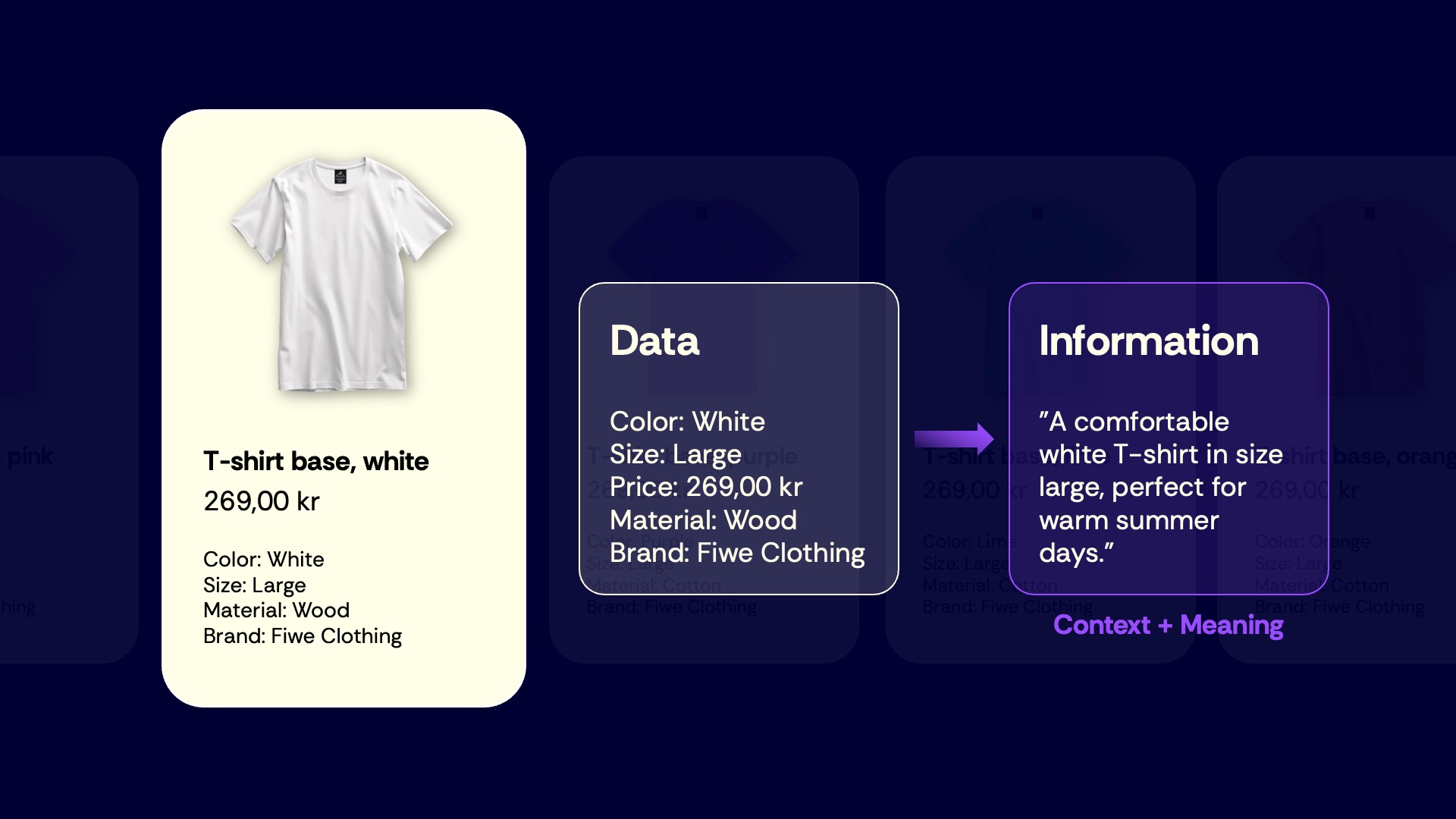
MDM stands for Master of Data Management and is a model for maintaining operational information in a quality-enhancing and cost-effective approach.
The main purpose of master data management is to maintain a so-called Single version of the truth for each entity, thereby obtaining an easily accessible and accurate source for all information and avoiding conflicting and ambiguous data for any one entity.
MDM includes all the information needed for a business to function and be effective. This includes customer and supplier information, personnel information, article and product, logistics data, etc.
Why is MDM needed?
When each entity is maintained in several different systems and by different roles within an organization, the same information needs to be added and enriched individually. This creates a high risk that the same entity contains different, and in many cases conflicting, information for different parts of the business. To ensure the quality of the information, costly and in many cases complex synchronization between different systems is necessary, often without common identifiers with a high risk of duplication. An implemented MDM strategy ensures that an entity has one and only one current version within the organization and that all parts of the business can take advantage of it whenever they need it.
Mergers and acquisitions
When companies merge, for example in a takeover, a situation arises where you have at least two or more “versions of the truth”. Without a defined and implemented process for master data, cost and risk increase during the merger effort.
These types of mergers are often complex due to the fact that within each organization there are own models of data and entities and unique dependencies between different systems. Without an implemented strategy for MDM, the complexity increases further. Not infrequently one is forced to settle for the fact that the merger cannot be fully implemented. Therefore, these projects often end in the implementation of unique processes in order for different data models to coexist. This, in turn, entails increased and persistent maintenance costs.
A well-defined MDM strategy facilitates merger work by providing a clear and uniform definition for each entity type. If this is also defined for the organization with which the merger is made, the conditions for a more successful outcome are also increased.
Reduce the risk of data silos with MDM
A data silo means that you have a subsystem that does not share its data with anyone else. There is no benefit in the rest of the operations from what is supplied in the silo. A typical case for silos is that on one side you have a marketing department running customer-specific and targeted campaigns, and on the other side a sales support system (CRM), but no information exchange between them. Therefore, the market does not fully understand the current prospects. The sales department, on the other hand, finds it more difficult to synchronize completed campaigns with their efforts towards customers. A target-oriented marketing campaign can then go completely wrong because it has not been able to take into account current customer relationship information even though it is available in the CRM system.
MDM reduces the risk of data silos by enabling efficient and quality-assured synchronization of data between systems. With MDM applied to the example in the paragraph above, one gets a uniform definition of what is “customer” and where is “prospect”. This makes it possible, without the risk of duplication, to provide the marketing department with up-to-date information on new prospects, customer status, etc. The sales organization receives reliable data on which customers entered into various marketing efforts, when they were carried out and in the best of cases — even the results of them. For example, if a customer has clicked on a certain CTA (Call To Action) in a promotional email — a good opportunity for the responsible salesperson to pick up the phone and book a customer visit.
MDM and GDPR
GDPR requires you to have control over your personal data and know where it lives. Every individual has the right to be erased, for example, and the business is responsible for removing that data everywhere. Without MDM this is difficult, because there is no consolidated view of what data exists, where it is stored and which systems use it.
With MDM and a single version of the truth, you get one consistent way to find, update and delete data across all connected systems. That makes it easier to comply with GDPR and to show how you handle personal data during an audit.
MDM system for managing important data
Master of Data Management is built around the principles a business has for handling important data. These principles include data models, tools used to manage data, roles and responsibilities, standardization, and technologies.
To maintain this, IT support is often needed whose purpose and functions support the MDM work. These include tools for data models, processes, enrichment, data quality, etc. needed for an effective MDM strategy.
There are a variety of MDM systems on the market, each with its own niche. It is therefore not possible to single out a single system as the optimal one for all activities, one should evaluate them on the basis of their own activities and their needs before making an investment decision.
Gartner periodically evaluates MDM systems available on the market and presents them in its Magic Quadrant for Master Data Management Solutions. The square is divided into four parts into which the systems are distributed – Niche Players, Challengers, Visionaries and Leaders.
Fiwe works with solutions from both Informatica which is the leader in the quadrant and is aimed at the enterprise segment and Centric (Formerly Contentserv) targeted at SMEs defined as challengers in the quadrant.
Vanliga frågor kring Master Data Management
Master data is the core data that describes an organization’s most important objects, such as customers, products, suppliers, employees and locations. It changes relatively rarely but is used in many systems and processes at the same time. That is why it is essential that it is accurate and consistent.
Master data describes who or what, such as a customer or a product. Transactional data describes what happens, such as an order, an invoice or a delivery. Every transaction refers to master data, so errors in master data quickly spread to orders, reports and analytics.
Common signs are that the same customer or product exists in several versions across systems, that departments report different numbers for the same thing and that a lot of time goes into manual corrections. Another sign is that it takes a long time to get new products or customers out in every channel. If you are also facing an acquisition or a system replacement, the need grows.
In an acquisition, two sets of customers, suppliers and products meet, each with its own definitions and systems. With MDM, you already have a shared model for each type of data and rules for matching and merging duplicates. That speeds up integration and reduces the risk of two data models having to coexist for years.
GDPR requires you to know what personal data you hold and where it lives, for example when someone asks to be erased. MDM gives you a consolidated view of each customer or person record and which systems use it. That makes it easier to find, update and delete the data everywhere.
A Data Steward is responsible for the day-to-day quality of master data within a specific area. That can mean reviewing new records, handling deviations flagged by the MDM solution and making sure definitions and rules are followed. The role is key to keeping quality high after the project has ended.
No. The need arises when the same data is used in several systems and by several departments, which applies to many mid-sized companies too. There are MDM platforms for different sizes and maturity levels, and a phased approach with one domain at a time makes it possible to start small.