Data quality vs. information quality: what is the difference and why does it matter?

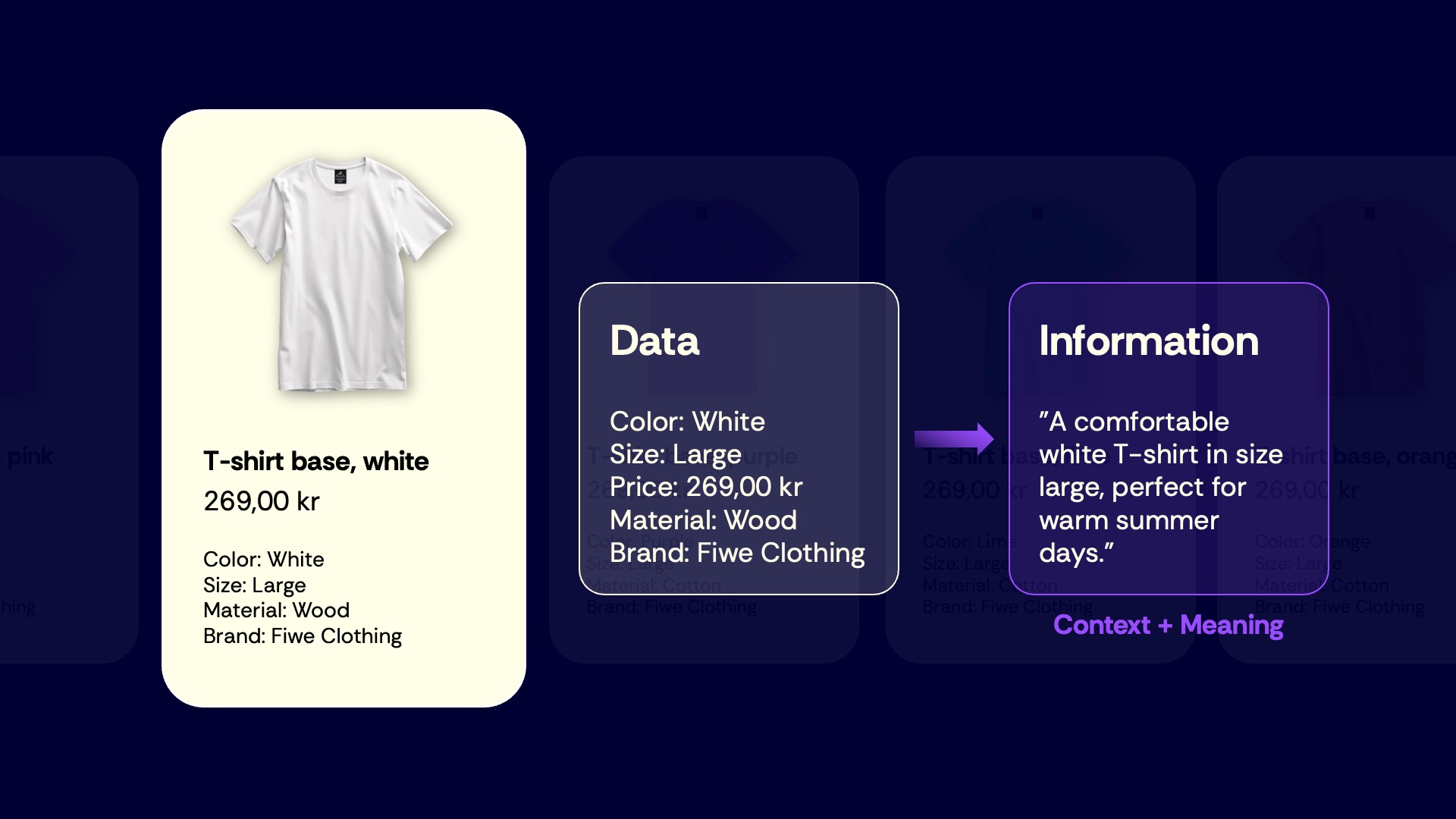
You have invested time and resources in improving your data quality. Mandatory fields are filled in, formats are correct, rules and dependencies are defined. The system shows a green status – what a releif.
Yet it still happens, a customer receives a t-shirt in the wrong material. Another does not trust the product description and chooses a different option. A third returns the product, not because it is wrong, but because the information about it was.
This is where the difference between data quality and information quality becomes clear. And it is a difference that costs more than most organisations are willing to admit.
What is data quality?
Data quality is about how reliable and accurate individual data points are, each on its own. It focuses on whether a value exists in a field, whether the format is correct, whether dependencies and rules are followed and whether the data meets the requirements defined in the system.
Common dimensions of data quality include:
- Completeness – are all mandatory fields filled in?
- Accuracy – does the value reflect reality?
- Consistency – is the same information aligned across systems?
- Timeliness – is the information up to date?
- Uniqueness – are there duplicates?
Data quality is necessary. Without it, information work quickly breaks down. But it is not enough.
What is information quality?
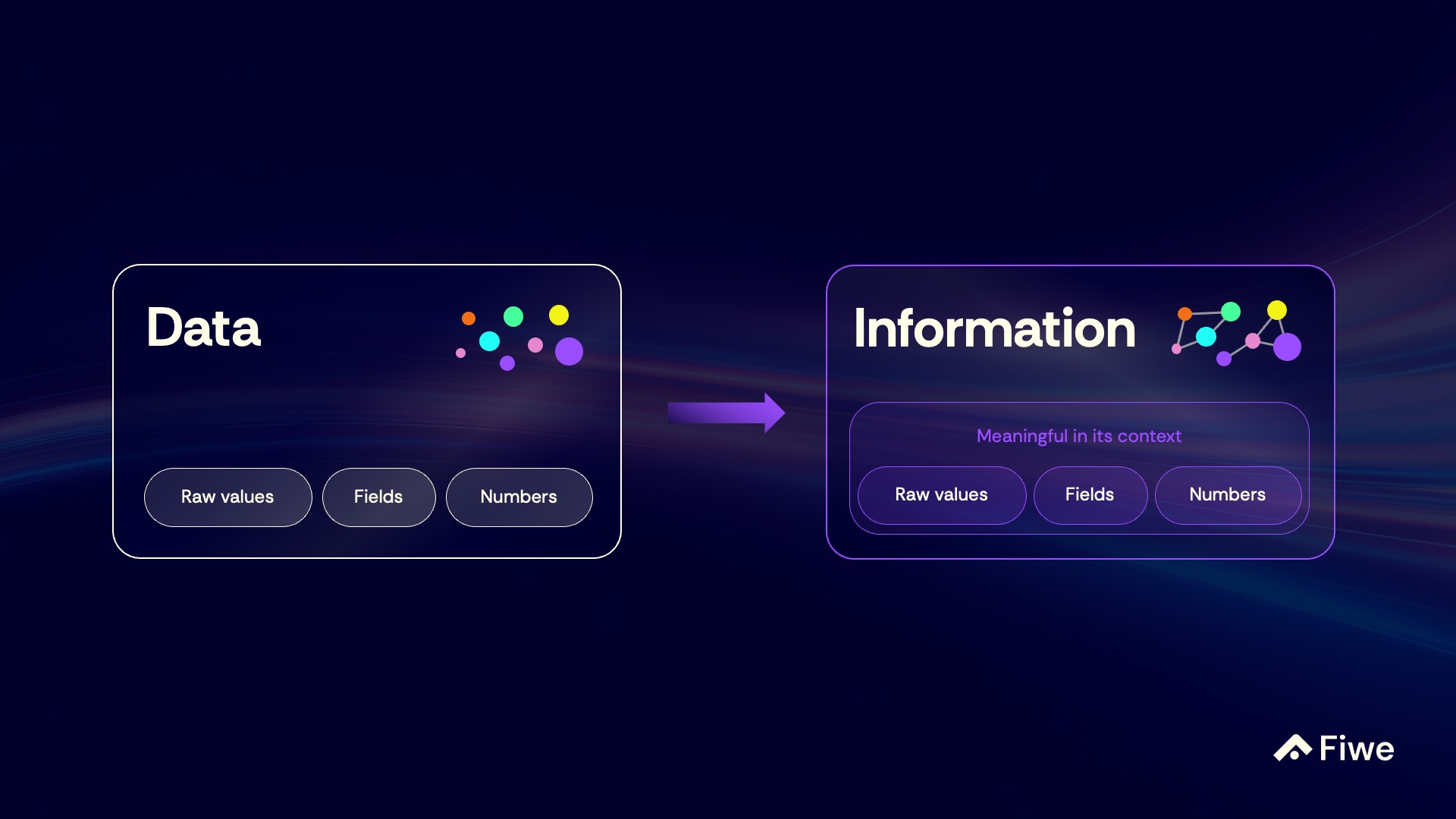
Information quality is about the whole. It concerns whether the combined product information is actually correct, reasonable and trustworthy when a human encounters it.
Customers do not see raw data. They see information. And information is the result of data points being combined, interpreted and presented in context.
This is where information quality takes over from data quality. It raises questions such as:
- Is the overall picture logical and consistent?
- Does the combination of data points represent the product correctly?
- Can a customer trust what is presented?
Information quality requires assessing reasonableness and context, not just the presence of data.
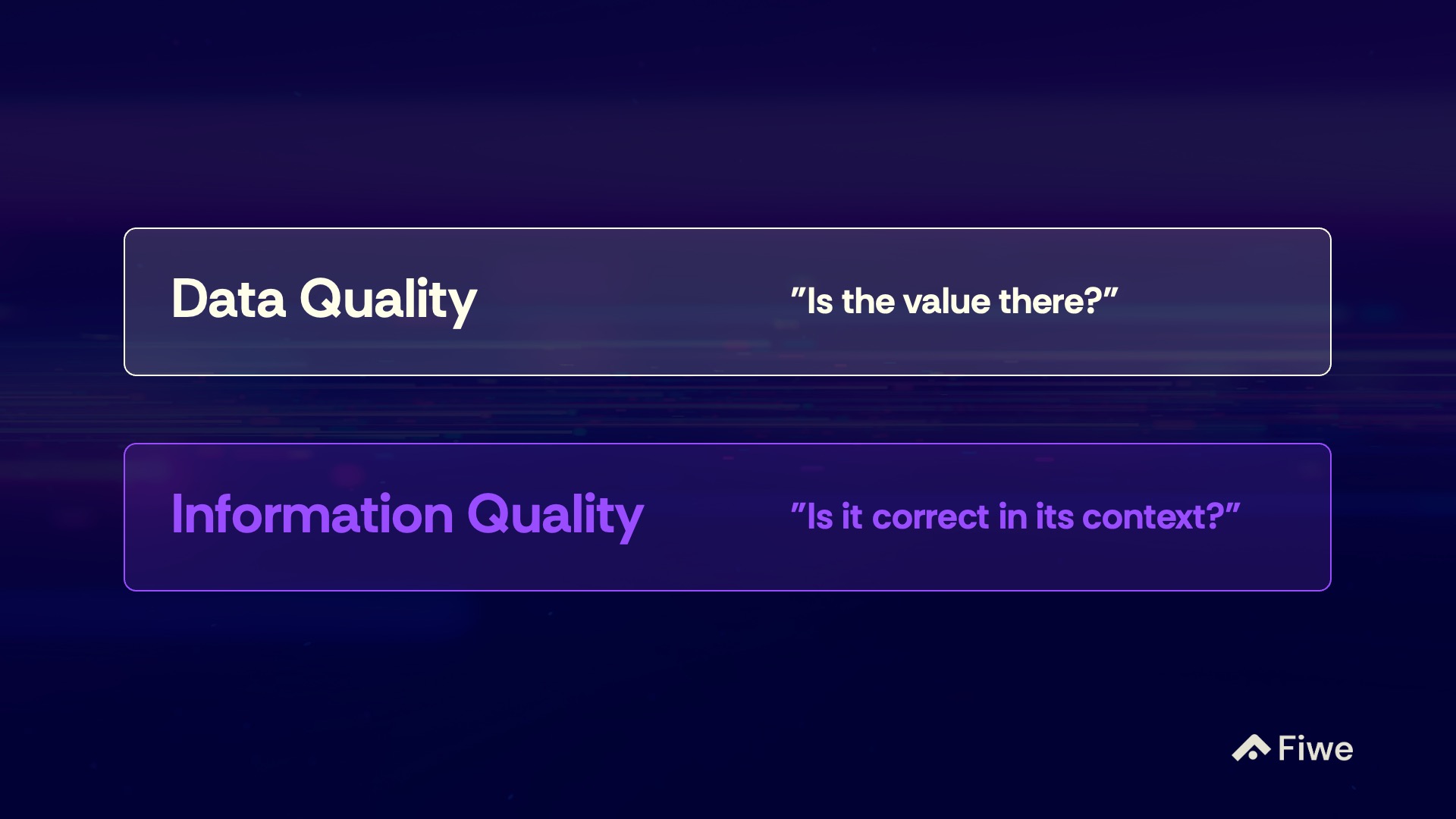
The difference between data quality and information quality
The simplest way to describe it is this. Data quality ensures that data exists. Information quality ensures that the information is correct.
They measure different things. They require different ways of working. And they provide different answers to the same question: can we trust what reaches the customer?
Many organisations have invested heavily in data quality and mistaken it for control over information quality. It is an understandable confusion. But it is an expensive one.
A concrete example: when data passes but information fails
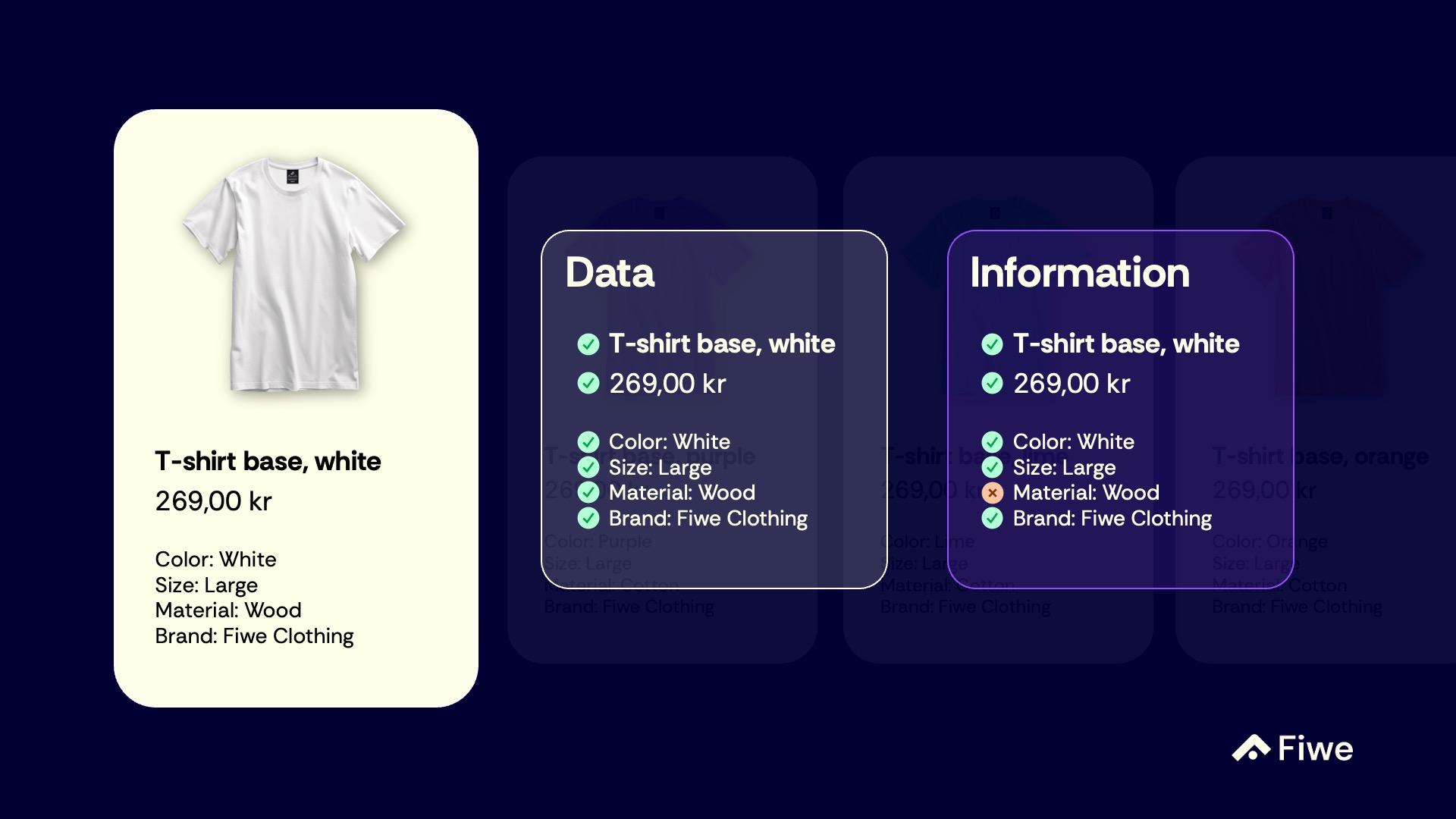
Imagine the following product data for one of your items:
If you look at each field in isolation, everything appears correct. All values are present, no mandatory fields are missing, formats are valid and the system shows a green checkmark. But as soon as the data points are combined into a product presentation, the problem becomes obvious. Wood is not a reasonable material for a t-shirt.
This is where data quality metrics fail you. The system can report complete and valid data, while you still communicate incorrect information to the customer. This is not a data problem. It is an information quality problem.
Why organisations get stuck measuring only data quality
The answer is simple: data quality is easy to measure. Field completion rates are concrete. They can be visualised in dashboards, tracked weekly and improved over time. It creates a sense of control and progress.
Information quality is harder. It requires assessing reasonableness and the full picture. It requires looking at what is actually communicated, not just what exists in individual fields.
It is difficult to automate with simple rules. It requires an understanding of the product, the context and the customer perspective. And that is why it is often postponed.
Organisations continue to fill more fields, add more rules and build more controls, believing it will solve the quality problem. It does not. It raises the bar for data quality without addressing the information quality that actually determines the customer experience.
The problem escalates as information volumes grow
This distinction has never been more important.
E-commerce no longer handles only basic data such as name, price, dimensions and images. Product information must now support multiple use cases at once: filtering, marketing, search engines, comparisons, marketplaces, translations, sustainability data, regulatory requirements and increasingly digital product passports.
At the same time, information is produced faster and through more channels. Suppliers, internal teams, external data sources and AI-supported processes all contribute to creating, structuring and enriching content.
This is an opportunity, but without control over information quality, you risk scaling the wrong thing. More data in does not mean better control over what goes out.
More information, more steps and faster processes increase the likelihood of information quality issues and make them harder to detect manually.
The consequences of poor information quality
The consequences are rarely abstract. They are concrete and measurable.
More returns:
Customers who receive a product that does not match the description return it. Return costs impact margins directly.
More support cases:
Unclear or inconsistent product information generates questions. Customer support spends time fixing what should have been resolved earlier.
Loss of trust:
A customer who cannot rely on the product information will not complete the purchase and may not return. This is not always visible in a single metric, but it affects conversion.
Reactive correction work:
When errors are discovered late, they are more expensive to fix. The later in the process, the higher the cost in time, money and internal friction.
Regulatory exposure:
As regulatory requirements for product information increase, especially around sustainability and Digital Product Passports, poor information quality becomes a direct compliance risk.
In summary, poor information quality is not an internal quality issue – it is a business issue.
Customers evaluate the whole, not your fields
When you work closely with data, it is easy to forget that customers do not see your structure. They see a product page.
And they evaluate the whole. Does the product seem correctly described? Is the information consistent? Can I trust what I see?
When the answer is no, customers rarely ask for help. They choose a different option.
This is a silent cost. It is harder to measure than completion rates. But it is real.
How to start ensuring quality in both data and information
You do not necessarily need a large new initiative to address this. You need a clearer way of asking the right questions.
Start by separating two questions:
- Does the data exist where it should?
- Does the information hold together when presented to the customer?
As long as these are treated as the same question, it is easy to assume that high completion rates equal high information quality. They do not.
The next step is to build processes and tools that can assess the whole:
- Define what correct information means for your organisation, not just what valid fields mean
- Introduce quality checks that assess reasonableness and context, not just the presence of values
- Treat information quality as a measurable dimension with clear ownership, not just an internal control step
- Evaluate whether your current tools and workflows support this type of assessment or if they are built only for data quality
It is only when the distinction becomes clear that the problem becomes visible. And only then can organisations begin to address why so many companies, despite significant investments in data quality, still lack real control over the information they send out.
Summary: data quality and information quality require different answers
We have become better at filling more fields. Now we need to become better at ensuring that the overall picture is correct.
Data quality and information quality are not substitutes. They complement each other. But they require different ways of working, different metrics and a deliberate decision to treat them as separate.
The organisation that makes this distinction clear has taken the most important step towards understanding what leaves the organisation and what customers actually experience.
Want to learn how your organisation can improve control over information quality? Contact us and we will tell you more about how we work with data and information quality.
Frequently asked questions about data quality and information quality
Data quality measures how accurate, complete and consistent individual data points are within a system. It focuses on whether data exists, follows the correct format and complies with defined rules, not whether the combined information is reasonable or trustworthy.
Information quality refers to how accurate, logical and trustworthy the combined information is when presented to an end user, such as a customer on a product page. It includes reasonableness, consistency and the overall picture, not just individual fields.
Data quality ensures that data exists and is valid. Information quality ensures that the information is correct and trustworthy when combined and presented. A product can have complete data in every field and still communicate incorrect information.
Metrics such as completion rate and format validation do not capture whether the combined information is logical or reasonable. A t-shirt can have the value “Wood” as material, which is valid data, but clearly incorrect information. This is not captured by data quality metrics.
Poor information quality leads directly to more returns, more support cases, lower conversion rates and loss of customer trust. It also creates reactive correction work and, as regulatory demands increase, potential compliance risks.
You need to clearly separate the questions: does the data exist and does the information hold together when presented? Organisations need processes and tools that assess reasonableness and context, not just the presence of values, along with clear ownership of information quality.
Product information quality is a combined concept that covers how accurate, complete, consistent and trustworthy product information is, both at the data level and the information level. It includes everything from technical attributes and material data to descriptions, images and pricing.